
Functional Hearing Assessment (FHA)
A hearing evaluation gives us a good picture of how well your ears work. During a standard evaluation, we play a series of beep tones and ask you to respond each time you hear them. We try to determine the very softest level you can hear that particular tone pitch. Then we play some speech at different volume levels and ask you to repeat it back. This is an important part of understanding how well your ears work, but that’s only part of the picture. Let's delve deeper into a more comprehensive type of hearing evaluation called Functional Hearing Assessment.
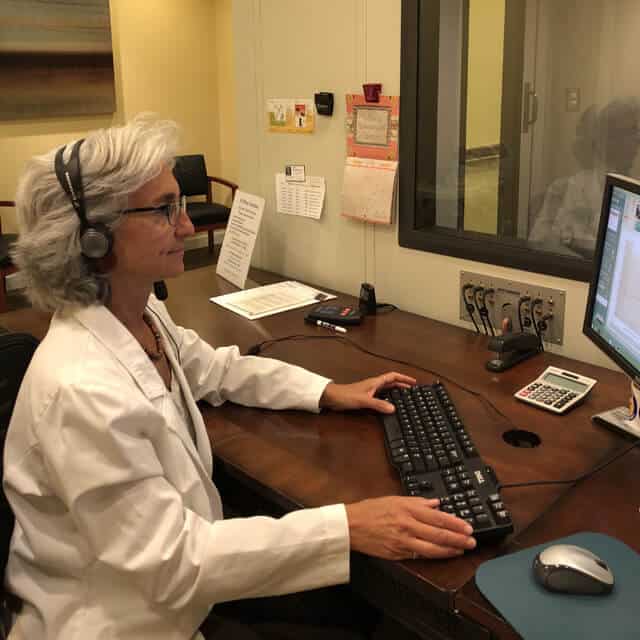
Our ears take in sound, but we hear and listen with our brains. As hearing issues come up, our brains begin to change in response. This is where a Functional Hearing Assessment (FHA) comes in: it helps us understand how you hear in the real world.
An FHA provides a much more detailed picture of how you communicate, from your ears to your brain. If you have a hard time hearing in more complicated listening environments—like a restaurant or a busy family gathering—or have memory issues, get distracted easily, or feel that you’re losing connections to the people in your life, an FHA will help us better understand these concerns and how to address them.
Steps of the Functional Hearing Assessment
Each Functional Hearing Assessment (FHA) is unique, so some may take longer than others. You and your significant communication partner can expect to be with us for 1½ to 2 hours. The process is completely painless. Due to the detailed nature of this evaluation, it is not covered by health insurance.
Online Questionnaires
Meet Dr. Lorin Oden
Physical Examination of Your Ears
Cognivue
Hearing Test
Sound Tolerance Test
Hearing In Noise Test
Developing a Treatment Plan
Functional Hearing Assessment in Salisbury, NC
A detailed hearing evaluation is key to achieving the best listening improvement possible.
Hearing Solutions of North Carolina provides expert functional hearing assessment services.
Contact us today to schedule a consultation!
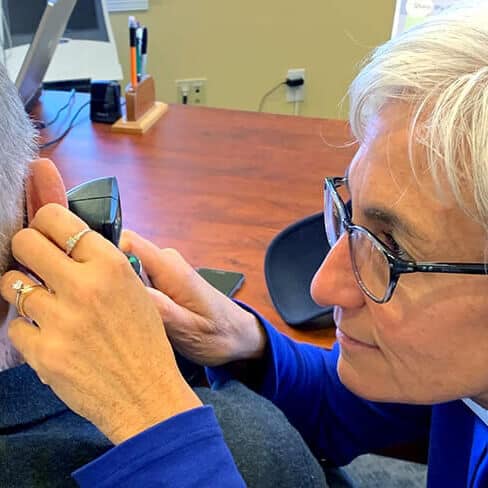 Dr. Oden will examine your ears with an otoscope (a magnified light), the same as your general practitioner does. She wants to make sure that any hearing loss you’re experiencing is not due to excessive earwax or perforation of the eardrum.
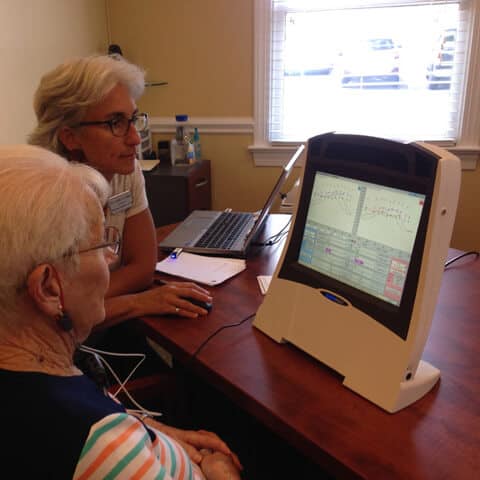 After we determine the softest sounds you can hear and have ruled out any medically correctable hearing issues, we test your sound preferences using loud tones and recorded conversational speech. This test allows her to understand which sounds are uncomfortably loud for you and how long you can tolerate being in a noisy situation. Your sensitivity impacts which hearing devices we choose and how we program them.
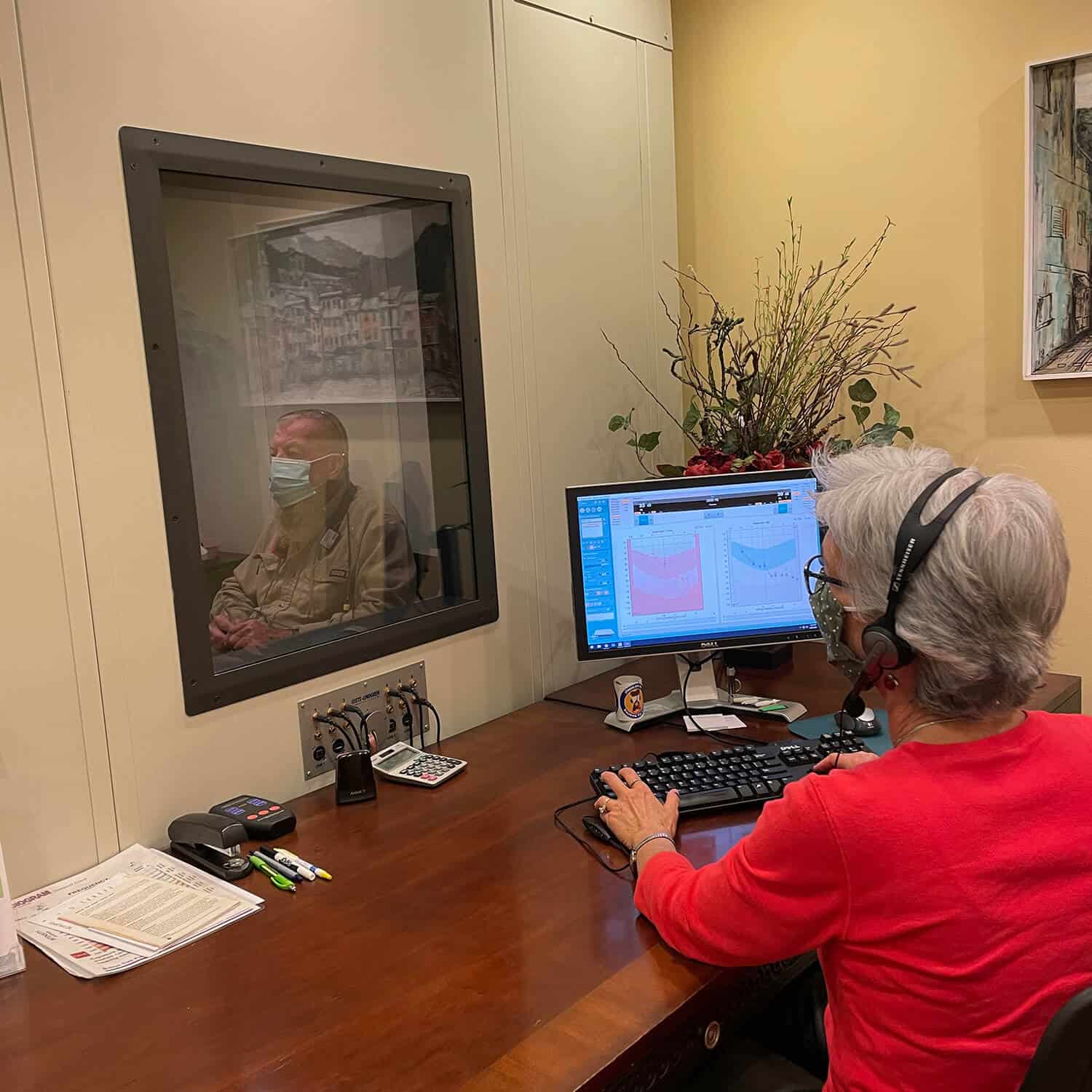 The insert earphones we used for your hearing examination are then removed. You will be asked to repeat recorded sentences presented at a conversational volume from the speakers in the sound booth. Background noise will also be coming from the speakers at a slightly softer volume than the sentences. This best replicates the difficulties you and most others have in understanding speech in the presence of background noise. This test measures understanding speech in a real-world environment and how much listening effort is required.
 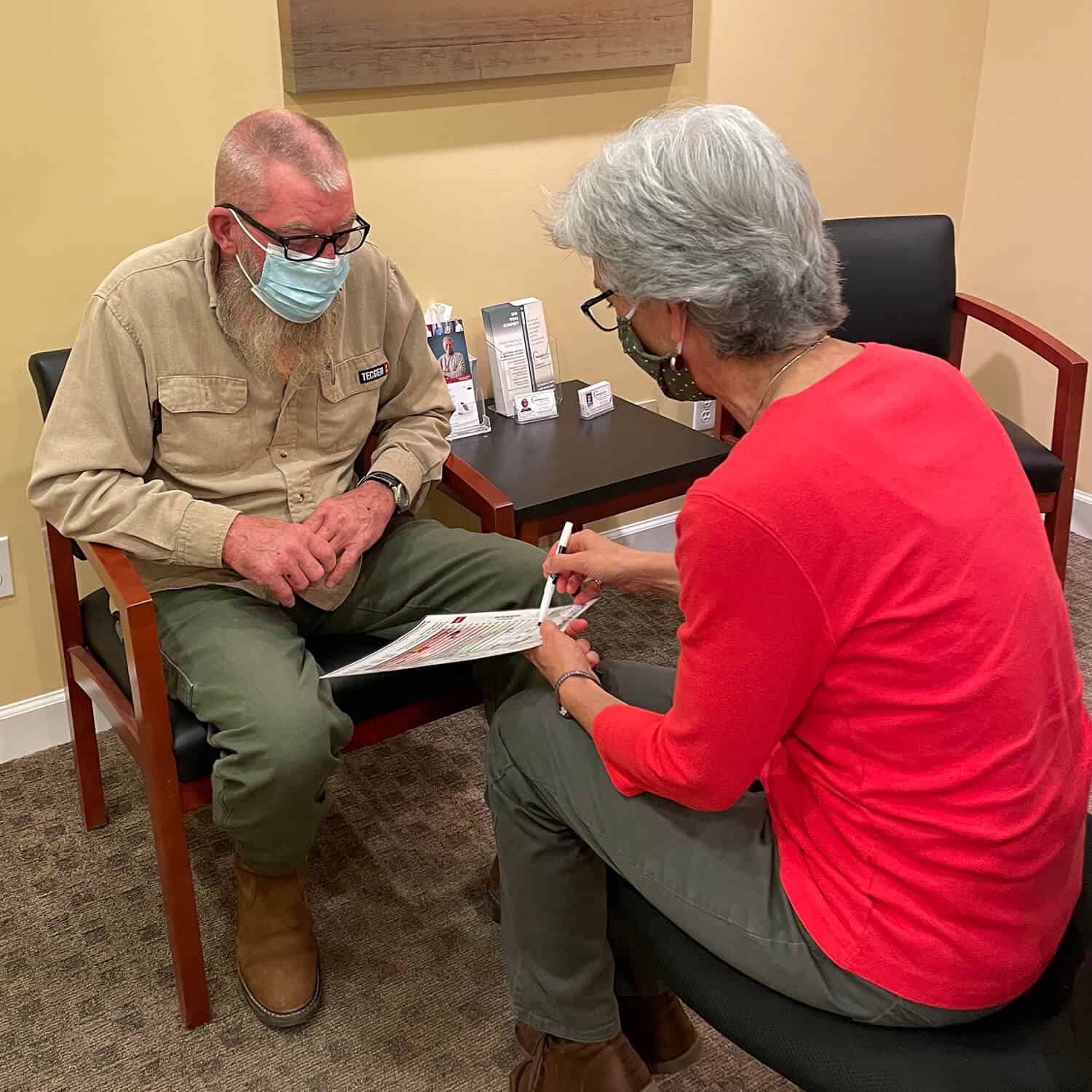 Dr. Oden will go over the results of your functional hearing assessment with you. She will recommend the best hearing aids for your specific hearing loss and lifestyle. There may be more than one option. Ask as many questions as you like, and she will help you arrive at the best decision to help you on your hearing journey.